


Bertani
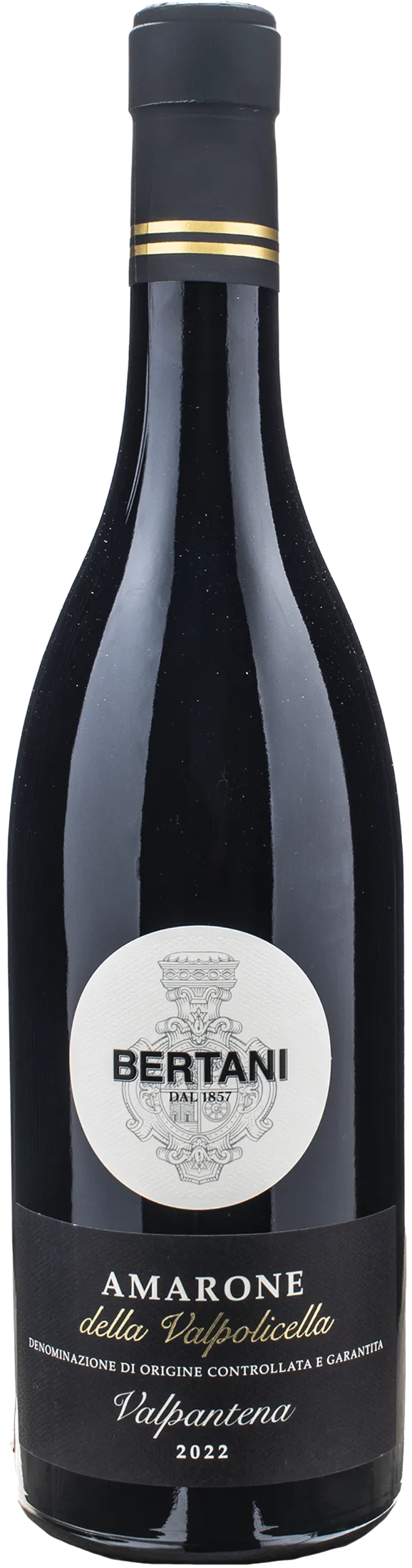
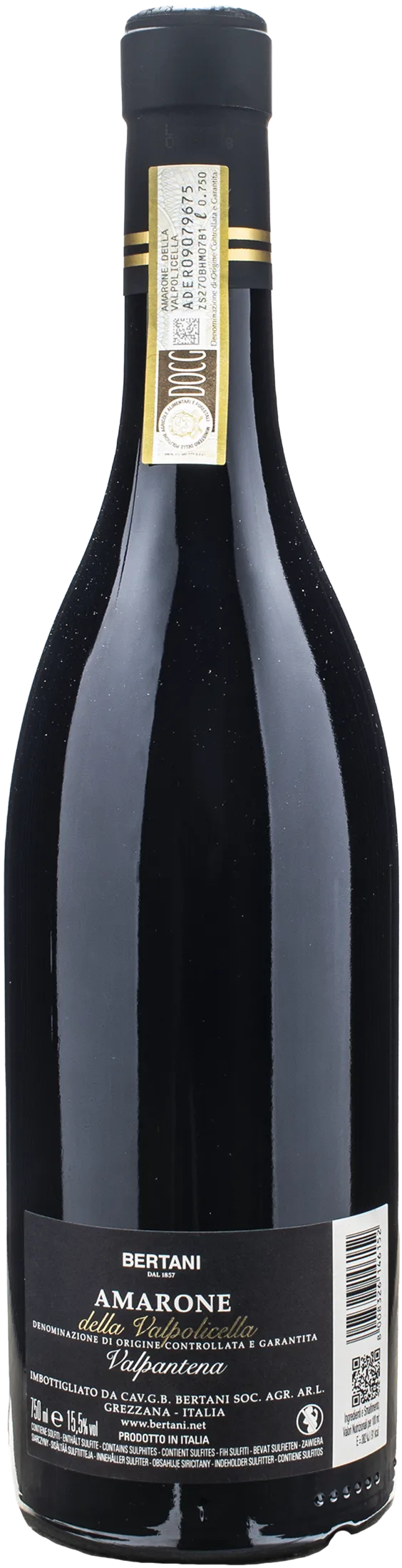
Amarone della Valpolicella Valpantena 2022
| Denomination | DOCG Amarone della Valpolicella Valpantena |
|---|---|
| Size | 0,75 l |
| Alcohol content | 15.5% by volume |
| Area | Veneto (Italy) |
| Grape varieties | 80% Corvina, 20% Rondinella |
| Aging | Aged in Slavonian oak barrels (average capacity 25 hl) and partly in barriques for about 30 months; after bottling, a further ageing of at least 6 months follows. |
- Name and vintage: Amarone della Valpolicella Valpantena DOCG 2022, still red wine
- Grape variety and format: 80% Corvina and 20% Rondinella, 0.75 litre bottle
- Drying and ageing: dried grapes, matured for 30 months in Slavonian oak and barriques
- Aromatic profile: notes of ripe cherry, black cherry, wild berries, spices and dried fruit
- Serving and pairings: serve at 18-20°C, decant for 1 hour, ideal with game, grilled meat and mature cheeses
Description
What kind of wine it is
The Amarone della Valpolicella Valpantena from Bertani is a still red wine from Veneto that stands out for its full and balanced sensory profile. Created from a skilful blend of Corvina and Rondinella grapes subjected to a rigorous drying process, it reveals clear aromas of ripe cherry, black cherry and wild berries on the nose, enriched by notes of spices and dried fruit. On the palate, it expresses a full-bodied structure, supported by soft tannins that give depth to the sip, with intense hints of blackberry and a slightly mentholated finish.
Where it comes from
The grapes come from the hills of Valpantena, considered the only cru within the Amarone della Valpolicella area. The vineyards, trained using the Guyot system, grow on soils with distinctive characteristics: marl-limestone on the eastern side and clay-limestone on the western side, both marked by a high presence of iron. The wine presents an intense red colour with violet hues.
How it is produced
The manual harvest takes place in mid-September, with a rigorous selection of bunches destined for a long drying process in the fruit lofts until mid-January. After crushing, fermentation begins at very low temperatures before stabilising at 22°C in the final stage. The wine matures for about thirty months in Slavonian oak barrels and, to a lesser extent, in barriques. The production cycle concludes with a further ageing of at least six months, a fundamental step to enhance its elegance and complexity.
History and Curiosities
The historic dedication of the Bertani winery to the production of Amarone is renewed in this wine, which originates from the hills of Valpantena. A particularly interesting fact is that Valpantena is the only subzone classified as a cru in the entire Valpolicella area.
Tasting notes

Perfume

Color

Taste
Serve at:
16 - 18 °C
Longevity:
10 - 15 years
Decanting time:
1 hour

- Start up year: 1857
- Oenologist: Staff tecnico Angelini Wines & Estates
- Bottles produced: 1.000.000
- Hectares: 65
A path that at times is more difficult, but that builds solid relationships. It has never been enough to please our customers. We have always wanted to make them happy.
In 2021, the following wines were awarded:
- BERTANI - Amarone della Valpolicella Classico 2012: Doctor Wine (96/100), The Wine Hunter Award (GOLD), Vinibuoni d'Italia (CROWN); Valpolicella Classico Superiore Ognisanti di Novare 2019: Doctor Wine (95/100), The Wine Hunter Award (RED); Valpolicella Ripasso Classico Superiore Catullo 2018: The Wine Hunter Award (RED)
- VAL DI SUGA - Brunello di Montalcino Vigna Spuntali 2016: Doctor Wine (96/100), The Wine Hunter Award (RED), Vinibuoni d'Italia (CROWN); Brunello di Montalcino Vigna del Lago 2016: The Wine Hunter Award (GOLD); Brunello di Montalcino Poggio al Granchio 2016: The Wine Hunter Award (RED)
- TENUTE SAN SISTO: Verdicchio dei Castelli di Jesi Classico Superiore Massaccio 2019: Doctor Wine (95/100), Vinibuoni d'Italia (CROWN); Castelli di Jesi Verdicchio Classico Riserva San Sisto 2018: The Wine Hunter Award RED, Vinibuoni d'Italia (CROWN)
- CANTINA PUIATTI: Venezia Giulia Archètipi Sauvignon 2018: The Wine Hunter Award (RED)
- TREROSE: Vino Nobile di Montepulciano Riserva Simposio 2017: The Wine Hunter Award (GOLD), Vinibuoni d'Italia (CORONA); Vino Nobile di Montepulciano Santa Caterina 2018: The Wine Hunter Award (RED) Read more


| Name | Bertani Amarone della Valpolicella Valpantena 2022 |
|---|---|
| Type | Red still |
| Denomination | Amarone della Valpolicella DOCG |
| Vintage | 2022 |
| Size | 0,75 l |
| Alcohol content | 15.5% by volume |
| Grape varieties | 80% Corvina, 20% Rondinella |
| Country | Italy |
| Region | Veneto |
| Vendor | Bertani |
| Story | History and Curiosities The historic dedication of the Bertani winery to the production of Amarone is renewed in this wine, which originates from the hills of Valpantena. A particularly interesting fact is that Valpantena is the only subzone classified as a cru in the entire Valpolicella area. |
| Origin | Valpantena Hills (Valpolicella, Veneto, Italy) |
| Soil composition | Marly-calcareous soils to the east and clayey-calcareous to the west, rich in iron. |
| Cultivation system | Guyot |
| Plants per hectare | 5.000 |
| Harvest | From mid-September |
| Fermentation temperature | Initially at 4-5 °C, until reaching 22 °C in the final phase |
| Production technique | Appassimento (grapes dried in drying rooms in single-layer crates) |
| Wine making | Through a careful selection of the best grapes, only healthy and perfectly ripe bunches are chosen for drying in the drying rooms of the Grezzana winery, placed in single-layer crates. In mid-January, fermentation begins with the destemming and crushing of the grapes, initially at a temperature of 4-5°C, rising to 22°C in the final stage. Ageing takes place in Slavonian oak barrels and a small portion in barriques for about 30 months; after bottling, the wine undergoes a further ageing period of at least six months. |
| Aging | Aged in Slavonian oak barrels (average capacity 25 hl) and partly in barriques for about 30 months; after bottling, a further ageing of at least 6 months follows. |
| Allergens | Contains sulphites |