


Berlucchi Guido
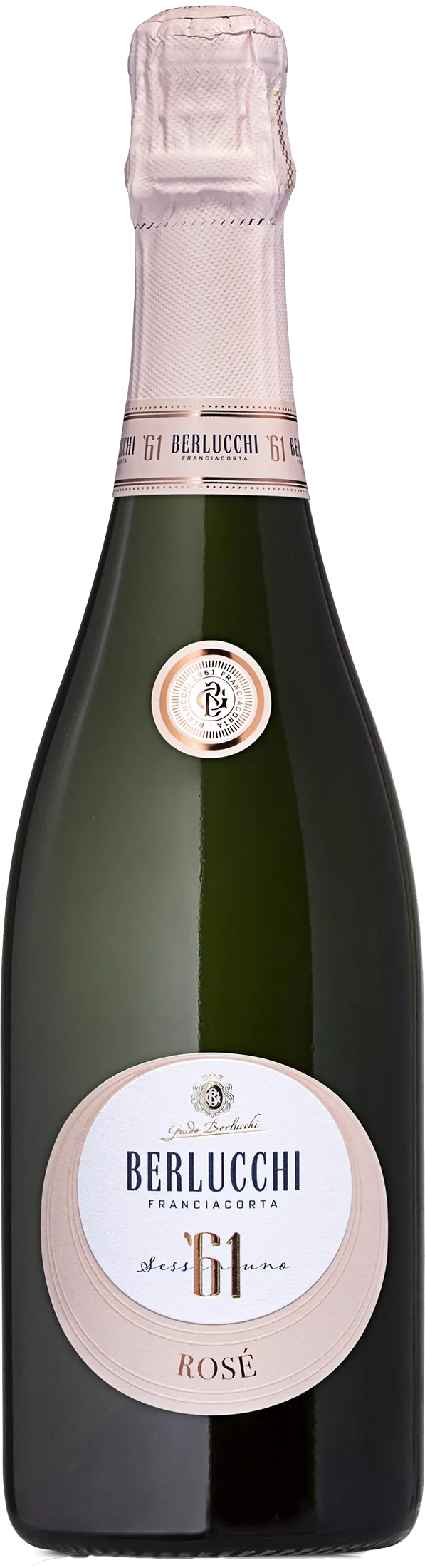
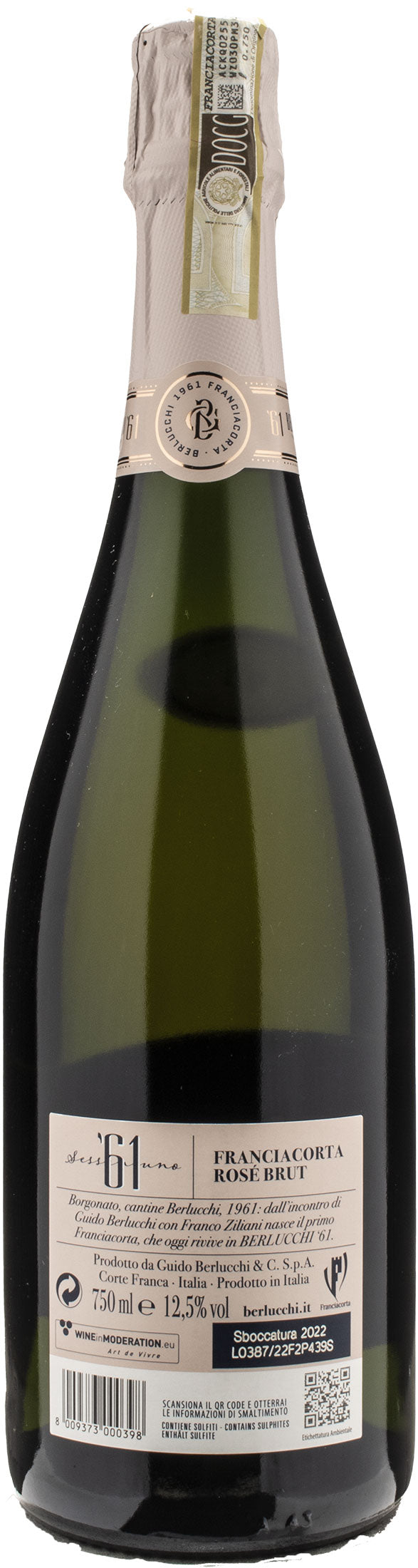
'61 Franciacorta Rosé Brut
| Denomination | DOCG Franciacorta Rosé Brut |
|---|---|
| Size | 0,75 l |
| Alcohol content | 12.5% by volume |
| Area | Lombardy (Italy) |
| Grape varieties | 60% Pinot Nero, 40% Chardonnay |
| Aging | Second fermentation in the bottle with ageing on the lees for at least 24 months, followed by at least 2 months after disgorgement. |
- Traditional method: second fermentation in the bottle, aged for 24 months on the lees
- Blend: 60% Pinot Noir and 40% Chardonnay, brief maceration on the skins
- Aromas: notes of wild berries, cherry, yeast, bread crust and pomegranate
- Taste: refined and lively, creamy bubbles with brut dosage that balances the acidity
- Pairings: serve at 6–8 °C, ideal with shellfish, fish and white meats
Description
What kind of wine it is
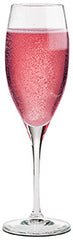
The Franciacorta Rosé Brut by Berlucchi is a rosé produced using the Traditional Method, which combines the characteristics of Pinot Noir and Chardonnay in a harmonious blend. In the glass, it displays an intense pink colour with a fine and persistent perlage. The bouquet offers notes of wild berries and cherry, enriched by hints of yeast and nuances of blood orange and pomegranate. On the palate, it is lively, characterised by a creamy and enveloping mousse. The Brut dosage balances the natural acidity, ensuring a structured and mineral sip, ideal to accompany shellfish, delicate risottos and white meats.
Where it comes from
The grapes come from the nineteen municipalities of Franciacorta, a Lombardy region with a strong tradition of sparkling wine production. The presence of morainic soils gives the wine a distinct mineral character and great structural finesse. The vines’ growing cycle benefits from a climate moderated by Lake Iseo and constantly ventilated by breezes from the Val Camonica. These conditions ensure the ideal ripening of the grapes, which are harvested between August and September. Strict management of low yields in the vineyard concentrates the aromas and preserves the acidic tension, an essential element for excellent longevity.
How it is produced
The process begins with gentle pressing of the grapes and alcoholic fermentation in stainless steel tanks. A decisive step is the brief skin maceration of the Pinot Noir, which imparts the characteristic colour and a pleasant vinosity to the wine. After the creation of the blend in spring, refermentation takes place in the bottle according to the Traditional Method. The prolonged ageing on the lees for at least twenty-four months gives aromatic complexity and depth of flavour. A period of rest after disgorgement completes the process, stabilising the final balance of the cuvée.
History and Curiosities
The ‘61 line celebrates 1961, the year of Berlucchi’s first historic bottling, which marked the birth of excellence in Franciacorta DOCG. This elegant Metodo Classico rosé perfectly embodies the pioneering spirit of a legendary winery. The extraordinary quality of this non-vintage cuvée is confirmed by prestigious international awards, including its inclusion in Wine Spectator’s Top 100 and an excellent 92/100 from James Suckling, guaranteeing absolute oenological prestige.
Awards
-
 4
4Italian Sommelier Foundation (FIS) guide This has been one of the most prestigious wine guides in Italy for over 10 years.
-
 89
89/100
Decanter is a wine and lifestyle magazine, published monthly in around 90 countries. The magazine includes industry news, classic guides and advice on wine and spirits.
-
 90
90/100
James Suckling is an influential American wine critic and journalist who worked at Wine Spectator for 30 years. He left the magazine in 2010 to start his own website and guidebook (JamesSuckling.com). He specialises in Italian and Bordeaux wines.
-
 92
92/100
One of the most prestigious wine guides in Italy.
-
 90
90/100
The prestigious international wine guide from the renowned Robert Parker, the world's most experienced and trusted wine taster.
-
 2
2One of the most prestigious wine guides in Italy.
-
 91
91/100
Wine spectator is the most influential wine guide on the internet.
Tasting notes
Perlage

Perfume

Color

Taste
Serve at:
06 - 08 °C
Longevity:
05 - 10 years
- Start up year: 1961
- Oenologist: Ferdinando dell'Aquila, Arturo Ziliani
- Bottles produced: 4.100.000
- Hectares: 130


| Name | Berlucchi '61 Franciacorta Rosè Brut |
|---|---|
| Type | Rosé brut |
| Denomination | Franciacorta DOCG |
| Size | 0,75 l |
| Alcohol content | 12.5% by volume |
| Grape varieties | 60% Pinot Nero, 40% Chardonnay |
| Country | Italy |
| Region | Lombardy |
| Vendor | Berlucchi Guido |
| Story | History and Curiosities The ‘61 line celebrates 1961, the year of Berlucchi’s first historic bottling, which marked the birth of excellence in Franciacorta DOCG. This elegant Metodo Classico rosé perfectly embodies the pioneering spirit of a legendary winery. The extraordinary quality of this non-vintage cuvée is confirmed by prestigious international awards, including its inclusion in Wine Spectator’s Top 100 and an excellent 92/100 from James Suckling, guaranteeing absolute oenological prestige. |
| Origin | Vineyards in the 19 municipalities of Franciacorta, in Lombardy, Italy |
| Climate | Mild climate tempered by Lake Iseo and fresh breezes from Val Camonica |
| Soil composition | Morainic soils |
| Yield per hectare | 9,000 kg/ha |
| Harvest | From the second ten days of August to the first ten days of September |
| Fermentation | Second fermentation in the bottle with ageing on the lees for at least 24 months, followed by at least 2 months after disgorgement |
| Production technique | Traditional method (second fermentation in bottle) with short maceration on Pinot Noir skins and ageing on the lees for at least 24 months |
| Wine making | Gentle and gradual pressing of the grape bunches with separation of the musts; alcoholic fermentation in stainless steel tanks; brief maceration of the Pinot Noir on the skins for a few hours (rosé maceration); preparation of the cuvée in the spring following the harvest; second fermentation in the bottle according to the Traditional Method; ageing on the lees for at least 24 months, followed by at least 2 months after disgorgement. |
| Aging | Second fermentation in the bottle with ageing on the lees for at least 24 months, followed by at least 2 months after disgorgement. |
| Total acidity | 7.5 gr/L |
| PH | 3.1 |
| Residual sugar | 8.0 gr/L |
| Dry extract | 22.0 gr/L |
| Allergens | Contains sulphites |