


Astoria
Prosecco Treviso Galie Extra Dry
| Denomination | DOC Prosecco Treviso Spumante Extra Dry |
|---|---|
| Size | 0,75 l |
| Alcohol content | 11.0% by volume |
| Area | Veneto (Italy) |
| Grape varieties | 100% Glera |
| Aging | The refermentation takes place at 18°C with selected yeasts and lasts about 20-25 days; this is followed by 5-10 days of maturation on the lees, then a period of rest in the bottle for a few weeks. |
- Name and grape variety: Prosecco Treviso DOC made exclusively from Glera grapes
- Style and alcohol content: Balanced Extra Dry, 11% alcohol content and fresh acidity
- Bubbles and colour: Pale straw yellow colour, with fine and long-lasting perlage
- Vinification: Charmat method in autoclave and fermentation in steel at 18–19°C
- Serving and pairings: Served at 6–8°C, it is ideal for aperitifs, starters and light dishes

Description
What kind of wine it is
Astoria Galie Prosecco Treviso Extra Dry is a lively and elegant sparkling wine, made exclusively from Glera grapes. It stands out in the glass for its pale straw yellow colour, enhanced by a fine and persistent perlage. The aromatic bouquet is clean and inviting, with delicate fruity and floral notes that lead to a harmonious taste. On the palate, freshness and balance are supported by the typical acidity of the Extra Dry style. The sparkling process takes place in a pressurised tank following the Charmat Method, a choice that enhances the fragrance of the sip and the purity of the aromas, delivering the most authentic identity of the grape variety.
Where it comes from
This sparkling wine originates in the heart of Veneto, within the renowned Treviso area. The vineyards are located in the Susegana area, at an altitude of about 150 metres above sea level, where they benefit from optimal sun exposure. The vines are trained using the traditional Sylvoz system, which allows for perfect vegetative balance. The Astoria winery masterfully interprets the characteristics of these lands, creating a wine with marked freshness, which has earned important accolades in the main industry guides.
How it is produced
The grapes are harvested by hand between September and October, preferably at night to preserve the aromas. After gentle pressing and must decantation, the primary fermentation takes place in stainless steel tanks at a controlled temperature with the help of indigenous yeasts. This is followed by a month’s rest on the fine lees before the secondary fermentation in a pressurised tank. After about thirty days, the wine completes its journey with a brief maturation. Perfect as an aperitif, it pairs beautifully with starters and light dishes.
History and Curiosities
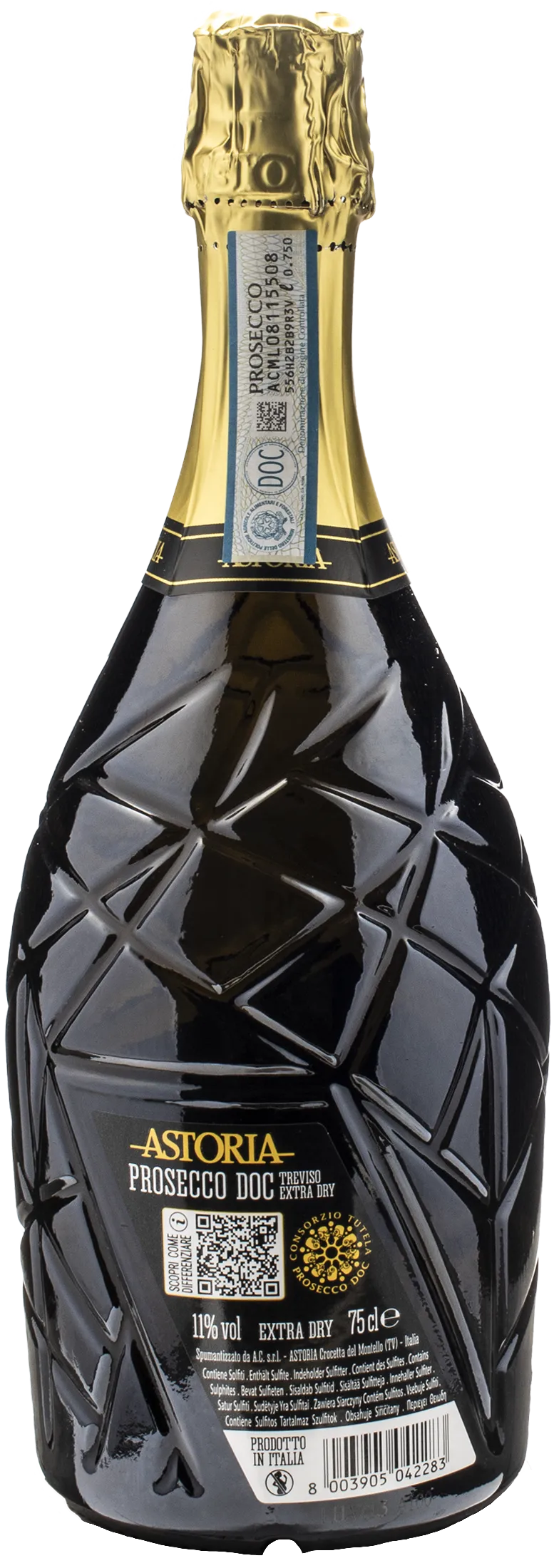
Founded in 1987 in Susegana by a family of historic winegrowers, Astoria stands out internationally for its constant drive for innovation. The Galié line has received a prestigious mention in the guide of the Italian Sommelier Association. The sensory experience of this Prosecco Treviso DOC begins with its exclusive faceted bottle adorned with luxurious golden details, a design gem that anticipates a harmonious sip, enhanced by fine and persistent bubbles ideal for accompanying convivial moments.
Awards
-
 3
3Italian Sommelier Association (AIS) guide
Tasting notes

Perlage

Perfume

Color

Taste
Serve at:
06 - 08 °C
Longevity:
03 - 05 years
- Start up year: 1987
- Oenologist: Roberto Sandrin
- Bottles produced: 2.000.000
- Hectares: 40
With Astoria bottles, the eye is aesthetically drawn to the long labels which are colourful, contemporary and fresh, elegantly covering thousands of convincing, substantial bottles of wine.
The winery is inThe Val de Brun Estate with vineyards spanning 40 hectares of the picturesque Prosecco Hills, whose unique landscape was added to the UNESCO World Heritage List in 2019. At the helm of the estate are Giorgio and Paolo Polegato, both hailing from a historic family of Treviso wine growers who know perfectly how to 'read' the climate and soils of this lucky area. Read more


| Name | Astoria Prosecco Treviso Galie Extra Dry |
|---|---|
| Type | White charmat method sparkling wine extra dry |
| Denomination | Prosecco DOC |
| Size | 0,75 l |
| Alcohol content | 11.0% by volume |
| Grape varieties | 100% Glera |
| Country | Italy |
| Region | Veneto |
| Vendor | Astoria |
| Story | History and Curiosities Founded in 1987 in Susegana by a family of historic winegrowers, Astoria stands out internationally for its constant drive for innovation. The Galié line has received a prestigious mention in the guide of the Italian Sommelier Association. The sensory experience of this Prosecco Treviso DOC begins with its exclusive faceted bottle adorned with luxurious golden details, a design gem that anticipates a harmonious sip, enhanced by fine and persistent bubbles ideal for accompanying convivial moments. |
| Origin | Susegana, Treviso |
| Cultivation system | Sylvoz |
| Plants per hectare | 3500 plants per hectare |
| Yield per hectare | 130–140 quintals per hectare |
| Harvest | Between September and October |
| Fermentation temperature | 18–19 °C (primary fermentation); 16–18 °C (secondary fermentation/sparkling process) |
| Fermentation | Approximately 25–30 days |
| Production technique | Charmat method (autoclave) |
| Wine making | Manual harvest between September and October during the coolest hours of the night; gentle pressing and static decantation of the must; primary fermentation in stainless steel at controlled temperature (18–19 °C) with indigenous yeasts; resting on fine lees for one month, then clarification/filtration; secondary fermentation in autoclave using the Charmat method for about 20–30 days at 16–18 °C with selected yeasts; brief ageing on the lees from refermentation (about 5–10 days), addition of dosage, bottling and resting in bottle for a few weeks. |
| Aging | The refermentation takes place at 18°C with selected yeasts and lasts about 20-25 days; this is followed by 5 0 days of maturation on the lees, then a period of rest in the bottle for a few weeks. |
| Residual sugar | 13.0 gr/L |
| Year production | 2000000 bottles |
| Allergens | Contains sulphites |