


Marchesi Antinori
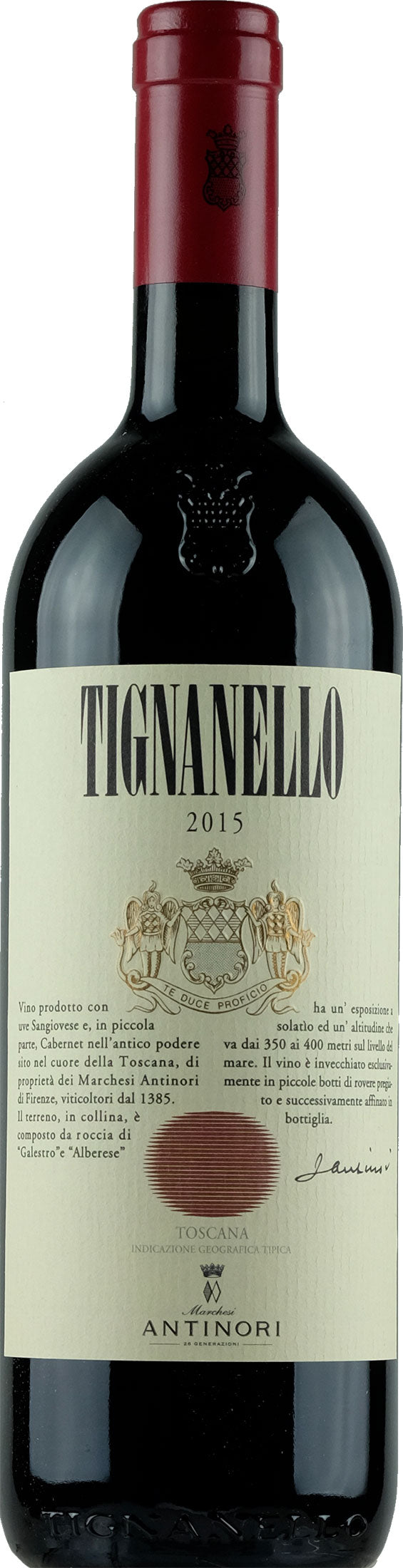
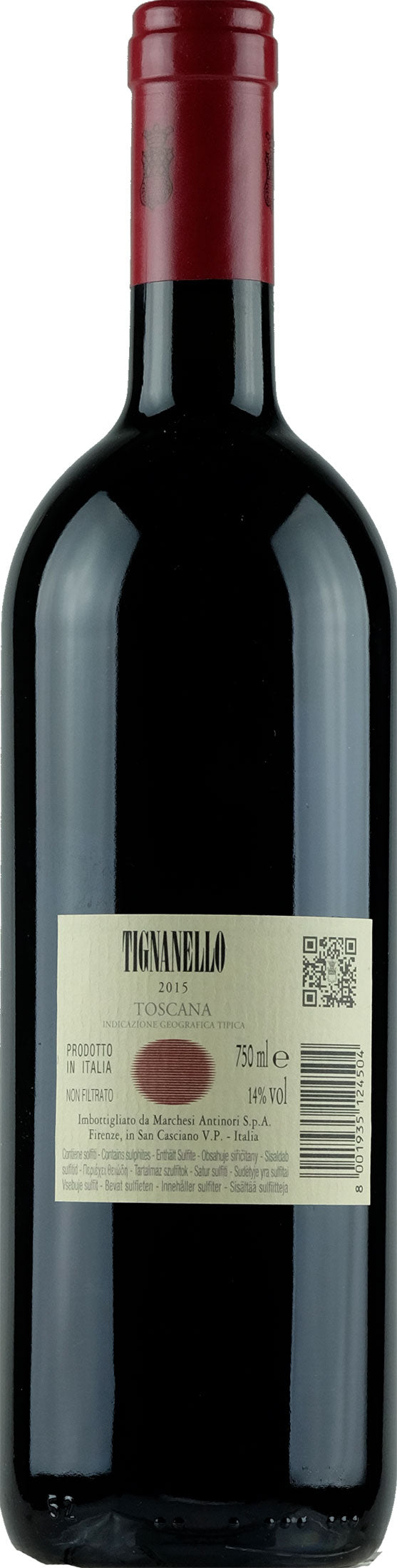
Tignanello 2015
| Denomination | IGT Toscana |
|---|---|
| Size | 0,75 l |
| Alcohol content | 14.0% by volume |
| Area | Tuscany (Italy) |
| Grape varieties | 85% Sangiovese, 10% Cabernet Sauvignon, 5% Cabernet Franc |
| Aging | Ageing for approximately 12 months in new oak barriques, followed by bottling and further ageing in the bottle for around a year. |
| Other years | 2007 , 2013 , 2023 |
- Vintage and appellation: IGT Tuscany 2015, 0.75 L bottle
- Varietal composition: 85% Sangiovese, 10% Cabernet Sauvignon, 5% Cabernet Franc
- Winemaking: Fermentation at 27-31°C, rack and return (délestage), malolactic fermentation in barriques
- Ageing: 12 months in new barriques and one year in bottle; unfiltered
- Profile and pairings: Dark fruit, spices, soft tannins; for red meats and cheeses
Description
What type of wine it is
Tignanello, produced by Antinori, is a Toscana IGT red wine, born from a blend of Sangiovese, Cabernet Sauvignon and Cabernet Franc without the use of white grapes. On the nose, it expresses aromas of ripe dark fruit, notes of undergrowth and sweet spices, while on the palate it reveals itself to be full, rich and round with a firm structure. The soft tannins accompany nuances of chocolate, coffee and citrus marmalade towards a very persistent finish, preserving the flavour profile intact thanks to the decision to offer the unfiltered wine.
Where it comes from
The grapes come from the Tignanello vineyard, located in the historic Chianti Classico area between the valleys of the Pesa and Greve rivers. The vines benefit from an excellent south-west exposure, thriving at an altitude of between 350 and 400 metres. The soil is distinguished by a calcareous composition, characterised by a strong presence of galestro and alberese, combined with tufaceous elements. These specific pedoclimatic conditions infuse the bunches with a structured profile, giving the wine a high evolutionary longevity over time.
How it is produced
The production process starts with a careful selection of the best bunches, maintaining low yields to concentrate the natural aromas. The temperature-controlled fermentation, kept constantly between 27 and 31 degrees Celsius, utilises delestage and calibrated pump-overs to extract colour and matter in a delicate way. Once this phase is complete, the wine undergoes malolactic fermentation directly in new oak barrels, before continuing its ageing there for approximately twelve months. Every barrel is subjected to sensory analysis before the final blend, which is followed by a long rest in the bottle that defines its harmony.
History and curiosities
Born in 1971 in an ancient Chianti Classico vineyard of the Marchesi Antinori, this wine marked a revolution. It was the first Tuscan blend produced without white grapes, enriched from 1975 with Cabernet. Produced only in the best vintages, this unconventional Toscana IGT expresses excellence awarded with 5 Bibenda bunches and Three Glasses from Gambero Rosso.
Awards
-
2015
 5
5Italian Sommelier Foundation (FIS) guide This has been one of the most prestigious wine guides in Italy for over 10 years.
-
2015
 2
2This guide is highly respected and offers the most comprehensive review of Italian wines. It has a long tradition and is based on blind tastings carried out by over 100 experts.
-
2015
 98
98/100
James Suckling is an influential American wine critic and journalist who worked at Wine Spectator for 30 years. He left the magazine in 2010 to start his own website and guidebook (JamesSuckling.com). He specialises in Italian and Bordeaux wines.
-
2015
 96
96/100
The prestigious international wine guide from the renowned Robert Parker, the world's most experienced and trusted wine taster.
-
2015
 3
3One of the most prestigious wine guides in Italy.
-
2015
 98
98/100
Vinous is the online guide from Antonio Galloni, one of the world's leading wine connoisseurs.
-
2015
 97
97/100
Wine spectator is the most influential wine guide on the internet.
Tasting notes

Perfume

Color

Taste
Serve at:
18 - 20 °C
Longevity:
Over 25 years
Decanting time:
1 hour
- Start up year: 1385
- Oenologist: Renzo Cotarella
The Antinori family’s first encounter with wine dates back to 1385, when Giovanni di Piero Antinori joined the Guild of Wine Merchants to make the best use of the family’s country properties in Valdarno, around Florence.
However, it was not until the 16th century that banker and merchant Alessandro Antinori made the wine from his estates famous in Italy and abroad, travelling from Lyons to Flanders, and from Spain to Algiers.
Wine was to remain the family’s passion and main business activity, so much so that in 1898 the "Fattoria dei Marchesi Lodovico e Piero Antinori" was created by brothers Lodovico and Piero, the sons of Marchese Niccolò – a direct descendent of that other Niccolò who purchased Palazzo Antinori in 1506 and poured his efforts into publicising Tuscan wines around the world and creating fine quality products. For 26 generations the Antinori family have continued to make history.
In 2023, at the beginning of February, Villa Antinori Toscana IGT 2019 was named the third wine in the world, the only Italian wine, in Wine Specator's Top 10 Values 2022: the list of the 10 wines that according to the American magazine represent world excellence in terms of value for money. Read more


| Name | Antinori Tignanello 2015 |
|---|---|
| Type | Red still |
| Denomination | Toscana IGT |
| Vintage | 2015 |
| Size | 0,75 l |
| Alcohol content | 14.0% by volume |
| Grape varieties | 85% Sangiovese, 10% Cabernet Sauvignon, 5% Cabernet Franc |
| Country | Italy |
| Region | Tuscany |
| Vendor | Marchesi Antinori |
| Story | History and curiosities Born in 1971 in an ancient Chianti Classico vineyard of the Marchesi Antinori, this wine marked a revolution. It was the first Tuscan blend produced without white grapes, enriched from 1975 with Cabernet. Produced only in the best vintages, this unconventional Toscana IGT expresses excellence awarded with 5 Bibenda bunches and Three Glasses from Gambero Rosso. |
| Origin | Tignanello Estate, in Chianti Classico (Tuscany, Italy), between the valleys of the Pesa and Greve rivers |
| Soil composition | Of calcareous origin with tuffaceous elements |
| Yield per hectare | Less than 8,000 kg/ha |
| Harvest | The weather conditions during the harvest period required a high level of attention to the selection and choice of the best grapes, especially in the case of Sangiovese. |
| Fermentation temperature | Average temperature 27°C (maximum 31°C) |
| Production technique | Alcoholic fermentation at a controlled temperature with délestage and pump-overs (more frequent but less intense), followed by malolactic fermentation in new oak barriques and ageing in barriques; unfiltered wine. |
| Wine making | Alcoholic fermentation at a controlled temperature (average 27°C, maximum 31°C) with rack and return (délestage) and pumping over; followed by malolactic fermentation in new oak barriques; aged for 12 months in barriques, followed by bottling and further bottle ageing for approximately one year; unfiltered. |
| Aging | Ageing for approximately 12 months in new oak barriques, followed by bottling and further ageing in the bottle for around a year. |
| Allergens | Contains sulphites |