


Clouet Andre
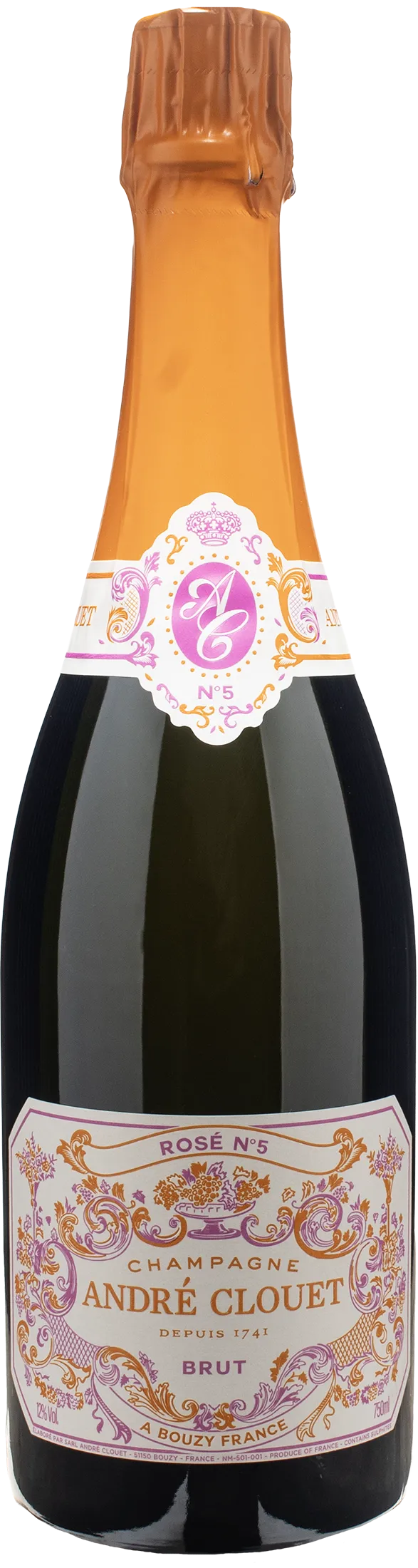
Champagne Rosè N.5 Brut
| Denomination | AOC Champagne Rosè Brut |
|---|---|
| Size | 0,75 l |
| Alcohol content | 12.0% by volume |
| Area | Champagne region (France) |
| Grape varieties | 92% Pinot Nero, 8% Pinot Meunier |
| Aging | Long ageing on the lees |
- Grand Cru blend: 92% Pinot Noir and 8% Bouzy red wine to achieve the rosé hue
- Traditional brut method: second fermentation in the bottle, riddling and disgorgement carried out by hand
- Aromatic profile: notes of strawberry, raspberry and almond with a toasted, persistent finish
- Bouzy AOC origin: Montagne de Reims, clay and limestone soils, cool climate
- Data and accolades: 12% ABV, 0.75 l bottle, Robert Parker rating 90
Description
What kind of wine it is
The Rosé Champagne produced by André Clouet is a sparkling wine with a delicate pale salmon colour, characterised by a fresh profile and a solid taste structure. This wine is created from a refined blend of Pinot Noir grapes, combined with a small portion of local red wine to give it its distinctive pink hue. Made according to the Traditional Method, it reveals a clean palate where lively aromas of strawberry and raspberry harmoniously blend with hints of almond and elegant, long-lasting toasted notes.
Where it comes from
This wine originates from the village of Bouzy, located in the southern part of the Montagne de Reims, in the heart of the renowned Champagne region. This geographical area is a prime natural habitat for Pinot Noir, thanks to the fortunate combination of a cool climate and soils rich in clay and limestone. Such environmental conditions favour a slow and steady ripening of the grapes, imparting a precise taste tension and a deep aromatic complexity typical of the sparkling wines from this area.
How it is produced
The production process begins with the manual harvesting of the grapes, which are then gently pressed. The first fermentation takes place in stainless steel tanks, preserving the original fruit's integrity. The wine then undergoes the bottle refermentation required by the Traditional Method, initiated using indigenous yeasts. This is followed by a long period of ageing on the lees, which ensures structure and richness in the final result. The process concludes with the remuage and manual disgorgement, essential steps to remove the sediment and guarantee maximum clarity of expression.
History and Curiosities
In 1770, during a dinner in honour of Marie Antoinette, André Clouet added a few drops of red wine to a white wine, inspiring the creation of the elegant Champagne Rosé No3. This fascinating story is brought to life today in this structured traditional method sparkling wine, born from the union of Pinot Noir grapes and the ancient Bouzy Rouge, historically known as Vin des Sacres. Later made lively for the English friends of the winery, this enchanting wine with its pale salmon colour celebrates a romantic tradition that enhances the authentic excellence of French winemaking.
Awards
-
 90
90/100
The prestigious international wine guide from the renowned Robert Parker, the world's most experienced and trusted wine taster.
-
 87
87/100
Wine spectator is the most influential wine guide on the internet.
Tasting notes

Perfume

Color

Taste
Serve at:
06 - 08 °C
Longevity:
15 - 25 years

- Start up year: 1741
- Oenologist: Jean-François Sainz-Clouet
- Hectares: 9
It took more than two centuries and several generations of Clouet to get plots of vines in the terroir of Bouzy, which remain in the hands of the family of its founder. Bouzy is situated in the Southern part of the Mountain of Reims. The 9 hectares are classified as 100% Grand Cru. Only 17 of the 300 existing villages benefit from the status of Grand Cru, Bouzy being one of them. Lovingly tended vines ripen perfectly Bouzy pinot noir, one of the world's most complex strains. There is 8,000 feet per acre and soils are cool with calcareous clay. Read more


| Name | Andre Clouet Champagne Rosè N.5 Brut |
|---|---|
| Type | Rosé classic method sparkling wine brut |
| Denomination | Champagne AOC |
| Size | 0,75 l |
| Alcohol content | 12.0% by volume |
| Grape varieties | 92% Pinot Nero, 8% Pinot Meunier |
| Country | France |
| Region | Champagne region |
| Vendor | Clouet Andre |
| Story | History and Curiosities In 1770, during a dinner in honour of Marie Antoinette, André Clouet added a few drops of red wine to a white wine, inspiring the creation of the elegant Champagne Rosé No3. This fascinating story is brought to life today in this structured traditional method sparkling wine, born from the union of Pinot Noir grapes and the ancient Bouzy Rouge, historically known as Vin des Sacres. Later made lively for the English friends of the winery, this enchanting wine with its pale salmon colour celebrates a romantic tradition that enhances the authentic excellence of French winemaking. |
| Origin | Bouzy (Montagne de Reims, Champagne, France) |
| Climate | Fairly cool |
| Soil composition | Good concentration of clay and limestone |
| Harvest | Mid-September |
| Production technique | Classic method brut (bottle fermentation, remuage and manual disgorgement) |
| Wine making | Classic method brut: manual harvesting in mid-September, gentle pressing, fermentation in stainless steel tanks; blending of 92% Pinot Noir with 8% Vin Rouge; secondary fermentation in the bottle with the addition of selected indigenous yeasts, long ageing on the lees, manual riddling and disgorgement. |
| Aging | Long ageing on the lees |
| Allergens | Contains sulphites |