


Alois Lageder
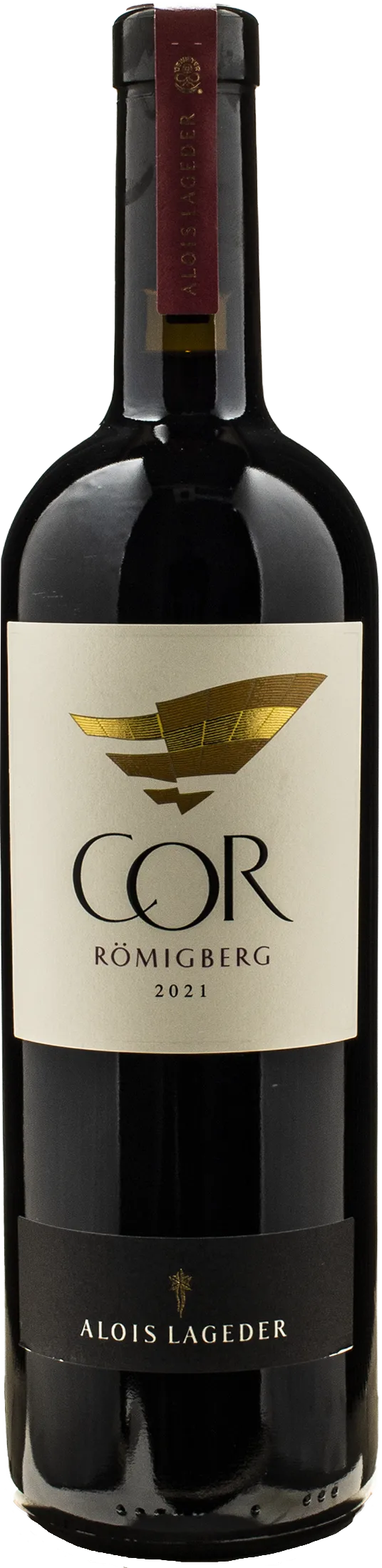
Cabernet Sauvignon Cor Romigberg 2021
| Denomination | IGT Vigneti delle Dolomiti |
|---|---|
| Size | 0,75 l |
| Alcohol content | 12.5% by volume |
| Area | Trentino Alto Adige (Italy) |
| Grape varieties | Cabernet Sauvignon, Petit Verdot |
| Aging | After malolactic fermentation, transfer and maturation in French oak barriques (Allier and Nevers, of which about two-thirds are new) for 20 months. |
- Grape varieties and style: Dry red wine made from Cabernet Sauvignon and Petit Verdot, still wine
- Certification: Biodynamic cultivation with Demeter certification and sustainable farming practices
- Aromas and colour: Notes of cherry, blackcurrant, tobacco and mint. Intense marasca cherry red colour.
- Vinification: Spontaneous fermentation in steel, 18-20 months in French oak barriques.
- Pairings: Excellent at 16-18 °C with grilled meats, lamb, game and mature cheeses.

Description
What kind of wine it is
Cor Römigberg Cabernet Sauvignon by Alois Lageder is a still red wine from Alto Adige that enhances the most authentic expression of the region. This blend combines Cabernet Sauvignon and Petit Verdot grapes, grown according to the principles of biodynamic agriculture. In the glass, it displays an intense marasca cherry red hue. The aromatic profile offers fruity notes of cherry and blackcurrant, enriched by hints of tobacco, violet, mint and delicate woody nuances. On the palate, it is long and concentrated, supported by pronounced yet harmonious tannins, finishing with a pleasantly fresh aftertaste.
Where it comes from
The grapes come from the Herz vineyard, located on the steep slopes of Römigberg, north-west of Lake Caldaro. The south-south-east exposure and warm microclimate ensure optimal ripening of the bunches. The vines grow between 245 and 330 metres above sea level, rooted in stony and sandy soil. This permeable terrain, rich in clay and limestone, gives the wine a solid structure. The Guyot-trained vines maintain a very low yield, allowing the fruit to develop deep concentration and aromatic intensity.
How it is produced
Vinification begins with gentle pressing, followed by spontaneous fermentation in stainless steel, activated by indigenous yeasts, with maceration lasting about two weeks. After malolactic fermentation, the wine matures for almost twenty months in small French oak barrels from the forests of Allier and Nevers. The skilful use of wood enriches the bouquet without overpowering the fruit’s character. This rigorous process enhances the wine’s texture, resulting in a concentrated, elegant sip characterised by balanced freshness.
History and Curiosities
Born in the prestigious “Herz” vineyard, located on the steep and sun-drenched slopes overlooking Lake Caldaro, Cor Römigberg Cabernet Sauvignon expresses Alois Lageder’s authentic vision. Produced according to the strict principles of biodynamic agriculture, this fine wine from Alto Adige DOC ferments spontaneously and matures for 18-20 months in French barriques from Allier and Nevers. The 2021 vintage, already celebrated with outstanding scores by international critics, offers in the glass an experience of extraordinary elegance, aromatic depth, and respect for the environment.
Tasting notes

Perfume

Color
Taste
Serve at:
16 - 18 °C
Longevity:
10 - 15 years
Decanting time:
1 hour
- Start up year: 1823
- Oenologist: Jo Pfisterer, Paola Tenaglia, Georg Meissner
- Bottles produced: 1.200.000


| Name | Alois Lageder Cabernet Sauvignon Cor Romigberg 2021 |
|---|---|
| Type | Red biodynamic still |
| Denomination | Vigneti delle Dolomiti IGT |
| Vintage | 2021 |
| Size | 0,75 l |
| Alcohol content | 12.5% by volume |
| Grape varieties | Cabernet Sauvignon, Petit Verdot |
| Country | Italy |
| Region | Trentino Alto Adige |
| Vendor | Alois Lageder |
| Story | History and Curiosities Born in the prestigious "Herz" vineyard, located on the steep and sun-drenched slopes overlooking Lake Caldaro, Cor Römigberg Cabernet Sauvignon expresses Alois Lageder’s authentic vision. Produced according to the strict principles of biodynamic agriculture, this fine wine from Alto Adige DOC ferments spontaneously and matures for 18-20 months in French barriques from Allier and Nevers. The 2021 vintage, already celebrated with outstanding scores by international critics, offers in the glass an experience of extraordinary elegance, aromatic depth, and respect for the environment. |
| Origin | Vineyard 'Herz' on the steep slope of Römigberg, northwest of Lake Caldaro (Kaltern), South Tyrol, Italy |
| Climate | Very hot microclimate |
| Soil composition | Terreno pietroso, sabbioso, permeabile di origine calcarea ed argillosa |
| Cultivation system | Guyot |
| Plants per hectare | 7000 |
| Yield per hectare | 26 hl/ha |
| Fermentation | Approximately 15–17 days |
| Production technique | Spontaneous fermentation with indigenous yeasts in stainless steel; malolactic fermentation; maturation in French oak barriques |
| Wine making | Gentle pressing of the grapes; spontaneous fermentation with indigenous yeasts for about 15–17 days in stainless steel with maceration; malolactic fermentation before ageing; maturation for 18–20 months in small French oak barrels (barriques) from Allier and Nevers, about half to two-thirds new depending on the vintage. |
| Aging | After malolactic fermentation, transfer and maturation in French oak barriques (Allier and Nevers, of which about two-thirds are new) for 20 months. |
| Total acidity | 5.1 gr/L |
| Allergens | Contains sulphites |